
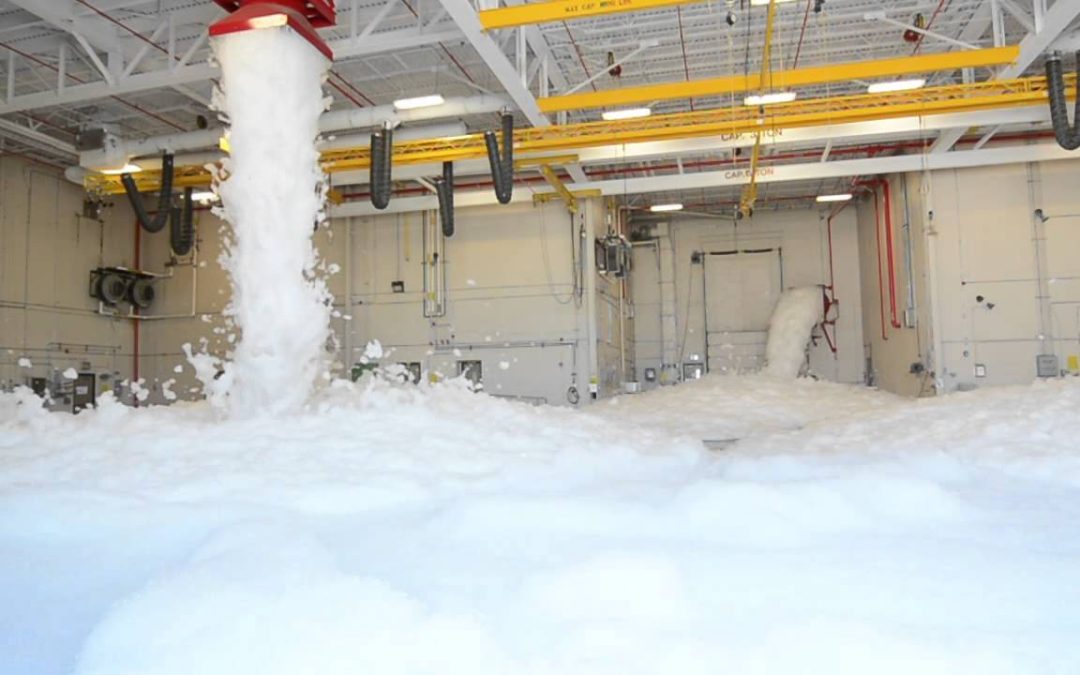
High-Expansion Foam System | Should Air Be Taken from Inside or Outside the Protected Enclosure?
High-Expansion Foam Systems use specially designed equipment known as Foam Generators, which produce foam by combining a foam solution with a large volume of air to generate foam bubbles with a high expansion ratio.
However, an important technical question arises:
Should the air required for foam generation be drawn from inside or outside the protected enclosure?
Let’s explore some important technical considerations based on NFPA standards.
1️⃣ According to NFPA 11 – Standard for Low-, Medium-, and High-Expansion Foam
The use of clean outside air is generally preferred for supplying High-Expansion Foam Generators.
However, inside air may be permitted under specific conditions, provided that the applicable code requirements are satisfied and appropriate testing demonstrates that the internal air conditions will not adversely affect foam generation and system performance.
2️⃣ According to NFPA 409 – Standard on Aircraft Hangars
For foam protection systems installed in aircraft hangars, the requirements of the applicable edition of NFPA 409 must be reviewed.
Special attention should be given to the air supply requirements for High-Expansion Foam Generators, which may differ from the general provisions of NFPA 11.
3️⃣ What About Ventilation and Automatic Dampers?
When designing a High-Expansion Foam System, consideration must be given to how displaced air will escape as the enclosure fills with foam.
Depending on the system configuration, suitable ventilation openings or automatic dampers may be required to allow air displacement.
The design should also prevent smoke, hot gases, and combustion products from contaminating the air supplied to the foam generators.
4️⃣ Why Is Outside Air Generally Preferred?
During a fire, the air inside the protected enclosure may contain:
- Smoke
- Soot Particles
- Hot Gases
These contaminants can negatively affect foam generation, bubble stability, and the foam expansion ratio.
Consequently, the overall performance of the High-Expansion Foam System in controlling or suppressing the fire may be reduced.
📌 Conclusion
The air supply source for High-Expansion Foam Generators is not simply an installation detail.
It is a critical design consideration that can significantly influence foam quality, expansion ratio, and overall fire protection performance.
Therefore, the selection of inside or outside air should always be evaluated against the applicable NFPA requirements, manufacturer’s recommendations, and the specific conditions of the protected enclosure.
📎 Attached: Illustrations showing different foam generator installation arrangements, along with relevant NFPA code extracts and manufacturer technical documentation.
Eng. Ali Hassan
PHF Engineer
🌐 Website: www.fire-matrix.org
📲 For inquiries and registration in our professional Fire Protection and Plumbing Design Courses:
WhatsApp: +201025012944
Fire Matrix | Learn • Design • Excel
#FireMatrix #FireProtection #FireEngineering #HighExpansionFoam #FoamSystem #NFPA11 #NFPA409 #AircraftHangars #FireSafety #FireProtectionEngineering